
What is ESPM? A Simple Guide for Small Businesses
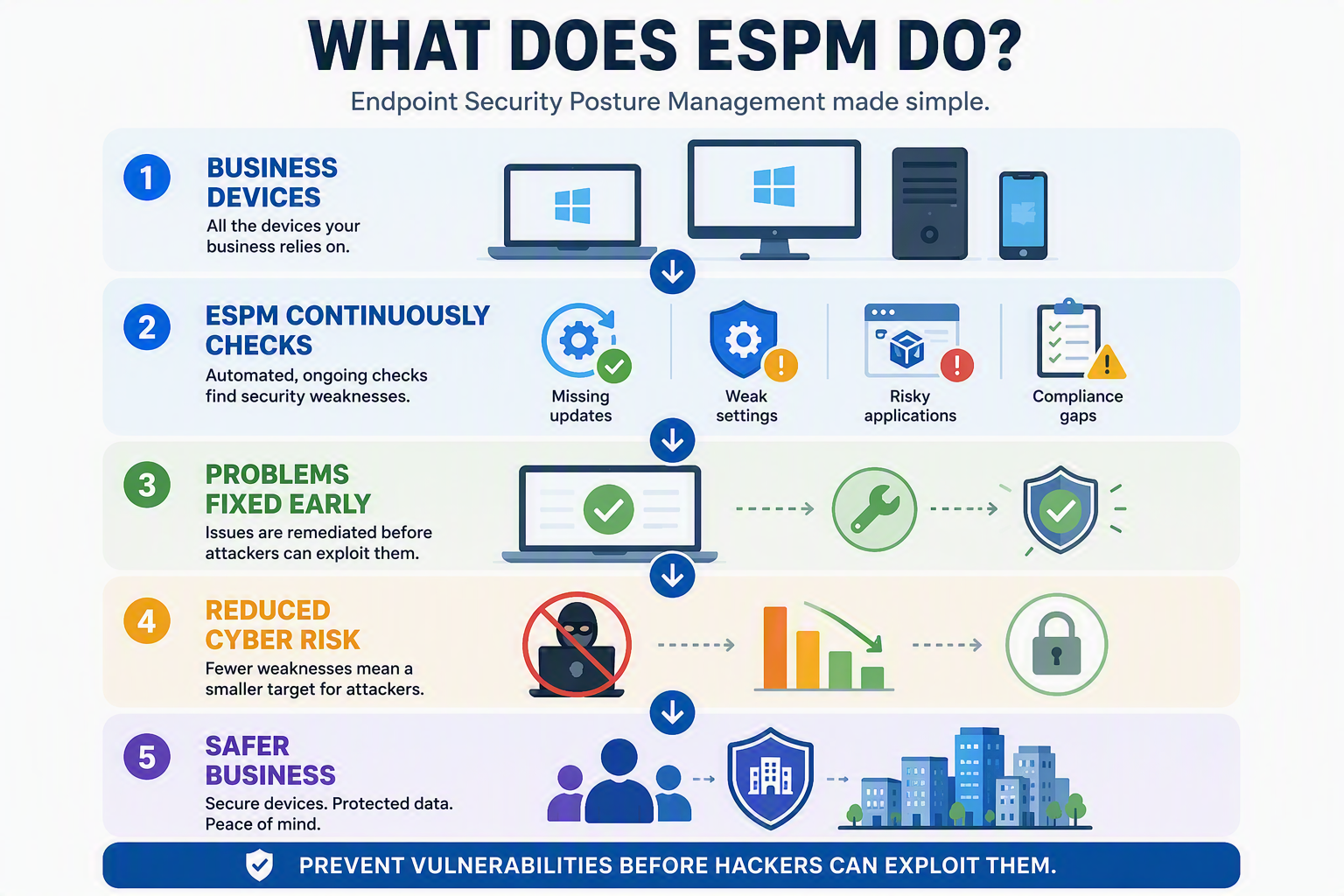
Cybersecurity can sometimes feel like an endless list of acronyms. One of the latest terms you’ll hear is ESPM, which stands for Endpoint Security Posture Management. Huntress describes ESPM as a continuous way to identify and reduce security weaknesses on business devices before attackers can exploit them.
The good news? The concept is much simpler than the name suggests.
Think of ESPM as a Security Health Check
Every laptop, desktop, server, and company device has security settings that help keep cyber criminals out.
Over time these settings can change:
- Software updates get missed
- Security features become disabled
- Unapproved applications get installed
- Devices fall out of compliance
- New vulnerabilities are discovered
ESPM continuously checks your devices to make sure they remain secure and properly configured. Instead of waiting for a problem to occur, it looks for weaknesses and helps fix them before they become a risk.
Why Does It Matter?
Many cyber attacks don’t start with sophisticated hacking.
They start with:
- An unpatched laptop
- A disabled firewall
- A vulnerable application
- Poor security settings
- Unauthorised remote access tools
Attackers look for the easiest way into a business. A single weak device can provide that opportunity. Huntress notes that endpoints are often the frontline of cybersecurity and that visibility into device security is essential for reducing risk.
ESPM helps close those gaps before they can be exploited.
A Real-World Example
Imagine locking your office every evening.
One day an employee leaves a window open.
The building still looks secure, but there’s now an easy way for someone to get inside.
ESPM is like having a security guard perform constant inspections, looking for those open windows and making sure they’re closed before anyone takes advantage of them.
How ESPM Differs from Antivirus and EDR
Many businesses already use antivirus software and are starting to adopt EDR (Endpoint Detection and Response).
These technologies are important, but they do different jobs.
Antivirus
Stops known malware from running.
EDR
Detects suspicious activity and helps respond to active threats.
ESPM
Proactively identifies weaknesses that could allow an attack to happen in the first place.
Think of it this way:
- Antivirus = locks on the doors
- EDR = alarm system
- ESPM = regular building inspections to find weaknesses before they become problems
A strong cybersecurity strategy needs all three.
Benefits for Small Businesses
For many small businesses, managing device security manually is almost impossible.
ESPM can help by:
✅ Identifying missing security updates
✅ Highlighting risky device settings
✅ Detecting vulnerable applications
✅ Supporting Cyber Essentials compliance efforts
✅ Providing visibility across all company devices
✅ Reducing the attack surface available to hackers
This means less time worrying about device security and more time focusing on running your business.
How KVS365 Helps
At KVS365, we believe prevention is better than cure.
That’s why we look beyond traditional antivirus solutions and focus on helping businesses maintain a strong security posture across every device.
Using modern tools such as Huntress Managed ESPM, organisations can continuously monitor device security, identify weaknesses, and reduce cyber risk before it turns into a security incident. Huntress positions Managed ESPM as proactive endpoint protection and security posture management designed to reduce endpoint risk and support compliance reporting.
Final Thoughts
Cyber criminals are constantly looking for weaknesses.
ESPM helps ensure they don’t find them first.
By continuously checking that your devices are secure, properly configured and compliant with best practices, ESPM adds another important layer to your cybersecurity strategy.
In simple terms:
EDR watches for attacks. ESPM helps stop them from happening in the first place.
Leave a Reply